Quick answer: Brown, crispy leaf tips usually mean the leaf's far end isn't getting enough water. The most common reasons are dry air, uneven watering (soil drying out completely, then soaked), and salts or chemicals building up from tap water and fertiliser. Water more evenly, flush the soil every month or two, raise humidity for tropical plants, and consider rainwater or filtered water for sensitive plants. Brown tips won't turn green again, but you can trim them and keep new leaves clean.
Brown tips rarely kill a plant, but they make a beautiful one look tired. They are also a clue. The tip is the part of the leaf farthest from the roots, so it is the first place to show when water, or what's in the water, isn't right.
Step 1: Read the pattern
Before changing anything, look closely at where the brown is and how it feels. The pattern points to the cause.
| What you see | Most likely cause |
|---|---|
| Just the very tips are brown and crispy, with a thin yellow line between brown and green | Dry air, uneven watering or tap water chemicals |
| Tips and edges brown, often with a white crust on the soil | Salt build-up from fertiliser or hard water |
| Brown tips plus soft, yellow lower leaves and wet soil | Overwatering and root problems |
| Brown, papery patches on the side facing the window | Sunburn or heat behind glass |
| Brown tips on the side facing an AC unit, heater or open door | Drafts and dry, moving air |
| Brown tips on an old plant that dries out within a day or two | Root-bound plant; time to repot |

Step 2: Find the cause
1. Dry air
Many popular houseplants, like calathea, ferns, palms, peace lily and dracaena, come from humid tropical forests. Indoor air, especially with air conditioning or heating, can be much drier. The leaf loses water from its tips faster than the plant can supply it.
Fix: group plants together, stand pots on a tray of pebbles and water (with the pot above the water line), keep them away from AC vents and heaters, or use a humidifier near the most sensitive ones. Misting helps only for a few minutes, so don't rely on it.
2. Uneven watering
Letting soil go completely bone-dry, then soaking it, stresses the fine roots. Each dry spell kills a little root tip, and the leaf tips show it a week or two later.
Fix: water when the top few centimetres are dry, not when the whole pot is dust-dry (except for succulents and snake plants, which like to dry out fully). See our guide on how often to water your plants.
3. Tap water chemicals
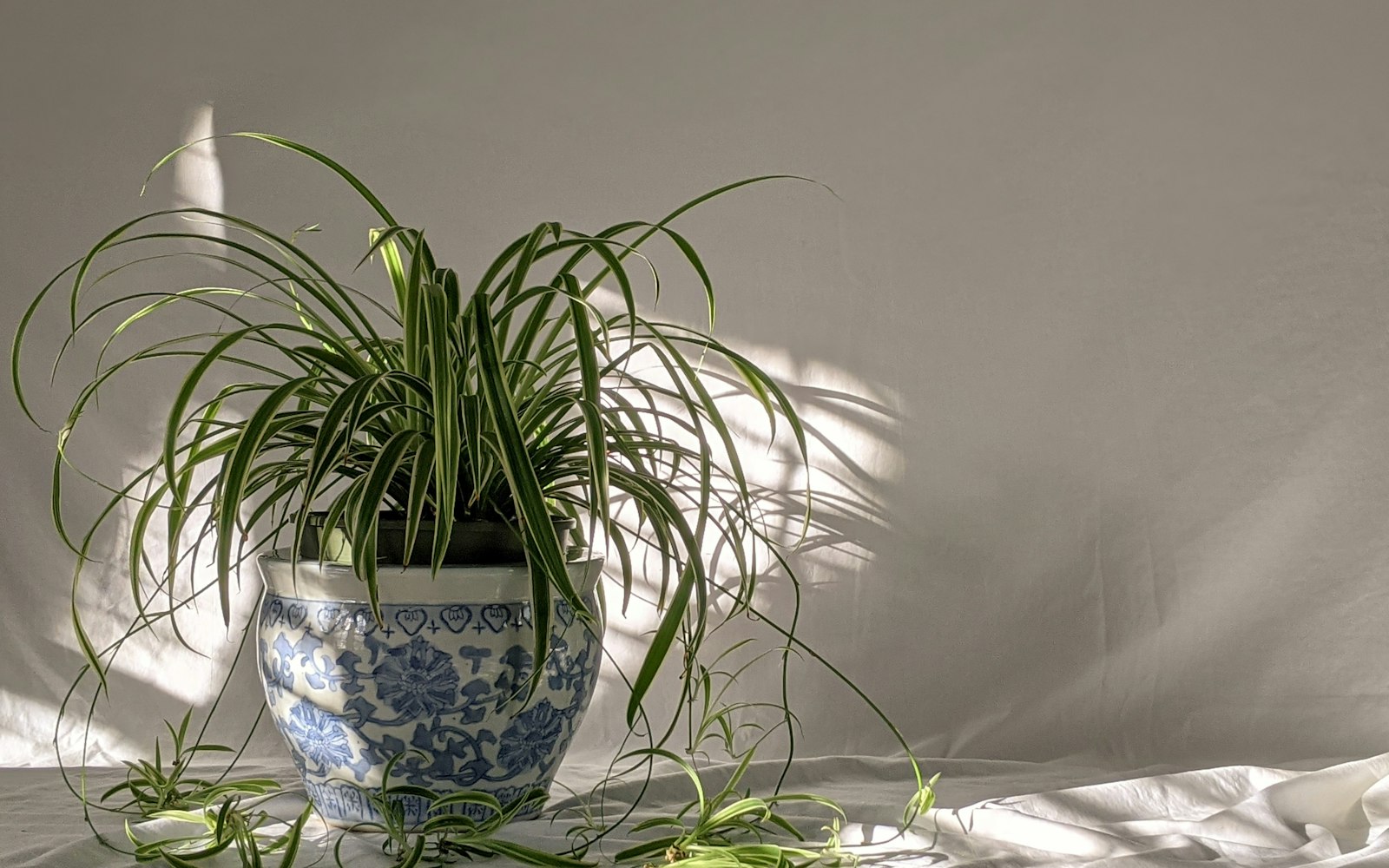
Some plants are sensitive to fluoride, chlorine and dissolved minerals in tap water. Spider plants, dracaenas, ti plants (Cordyline), calatheas and prayer plants are well-known examples. The chemicals collect at the leaf tips, where water evaporates, and burn them.
Fix: for sensitive plants, use rainwater, filtered water or distilled water when you can. Letting tap water stand overnight lets some chlorine escape, but it doesn't remove fluoride or minerals.
4. Salt build-up from fertiliser and hard water
Every time you feed or water with hard water, a little salt stays in the soil. Over months, it builds up and pulls water out of the roots. Signs: brown tips and edges, a white crust on the soil surface or the pot rim, and slow growth.
Fix: flush the soil every month or two: water slowly and heavily in a sink or shower so several pots' worth of water runs through. Feed at half the label strength, and never feed a bone-dry plant; water first.
5. Too much water or poor drainage
It sounds backwards, but overwatering also causes brown tips. Rotting roots can't move water up to the leaves, so the tips dry out even while the soil is wet. Usually you'll also see yellow, soft lower leaves.
Fix: let the soil dry more between waterings, check that the pot drains, and look at the roots if it doesn't improve. Our guide to yellow leaves covers root rot in more detail.
6. Root-bound plant
When roots fill the whole pot, there is little soil left to hold water. The plant dries out very quickly between waterings, and tips brown.
Fix: if roots are circling the bottom or growing out of the drainage hole, repot into a container just one size larger with fresh mix.
A note on fluoride: it doesn't only come from tap water. Potting mixes with a lot of perlite, and fertilisers that contain superphosphate, can add fluoride too, and plants take it up more easily in acidic soil.
For very sensitive plants like dracaena, Clemson Extension advises keeping the soil pH around 6.0–6.5, avoiding mixes with a high share of perlite and skipping superphosphate fertilisers. Coco chips or orchid bark are good alternatives for keeping the mix airy.
Plants that get brown tips most often

- Spider plant: tap water fluoride, salts and dry soil.
- Dracaena (corn plant, dragon tree): fluoride and salts; very sensitive.
- Calathea and prayer plant: dry air and tap water.
- Peace lily: uneven watering and dry air.
- Palms (areca, parlour, kentia): dry air and salt build-up.
- Ferns: dry air and soil drying out.
If you grow these, a jug of rainwater or filtered water and a pebble tray will make a big difference.
Hard water is common in many parts of Pakistan and South Asia, especially where homes rely on groundwater from a bore or tank. If a white crust appears on your pots after a few months, your water is adding minerals.
For your most sensitive plants, collect monsoon rainwater in a clean, covered bucket, or use RO-filtered drinking water if you have it at home. Water your other plants with tap water as usual and flush their soil every month or two.
Should you cut off brown tips?
Yes, if they bother you. It won't harm the plant, and new leaves won't be affected by the old tips.
- Use clean, sharp scissors.
- Follow the leaf's natural shape, cutting at an angle so the tip still looks pointed.
- Leave a very thin line of brown rather than cutting into green tissue. Cutting into healthy tissue can make a fresh brown edge.
If the whole leaf is more than half brown, cut it off at the base instead.
A simple prevention routine
- Weekly: check the soil before watering; water evenly and empty saucers.
- Monthly: turn the plants, wipe the leaves, check for pests under the leaves.
- Every 1–2 months: flush the soil with plenty of water.
- Seasonally: move plants away from heaters in winter and AC vents in summer; feed lightly only in the growing season.
- Every 1–2 years: repot plants that dry out too fast.
Let GreenScan help
Not sure whether the browning is dry air, a watering issue or a disease? Take a clear photo of the affected leaf in daylight and run a health check in the GreenScan Plant AI app. It suggests the likely cause and what to try first, and you can ask Ask Botanist follow-up questions for your specific plant and room. Treat the result as a helpful guide, and check the soil and roots yourself.
FAQ
Will brown tips turn green again? No. Brown tissue is dead and won't recover. Fix the cause and the new leaves will grow in clean. Trim the old tips if you like.
Is misting enough to stop brown tips? Usually not. Misting raises humidity for only a few minutes. Grouping plants, a pebble tray or a humidifier works much better.
Can brown tips be caused by pests? Rarely on their own. Pests usually cause speckling, spots or yellowing. But spider mites thrive in the same dry air that causes brown tips, so check under the leaves too. See our guide to mealybugs and spider mites.
Why are only the new leaves getting brown tips? This often points to root problems, a root-bound pot or salt build-up affecting new growth. Check the roots and flush the soil.
Is boiled and cooled water better for plants? Boiling removes chlorine but concentrates minerals and does not remove fluoride. Rainwater or filtered water is a better choice for sensitive plants.
Sources and further reading
- Why does my houseplant have brown leaf tips and edges?, Iowa State University Extension (Yard and Garden)
- Dracaena, Clemson Cooperative Extension Home & Garden Information Center
- Watering houseplants, University of Illinois Extension
Cover photo: Susan Wilkinson / Unsplash.