Quick answer: Powdery mildew looks like white or grey flour dusted on the leaves, and it can be wiped off with a finger. Leaf spot shows as brown, black or purple spots, often with a yellow ring around them. Rust makes orange or brown bumps on the underside of leaves. All three are mostly caused by fungi that spread in crowded, poorly ventilated plants and leaves that stay wet. To treat them: remove the worst leaves, water the soil instead of the leaves, give the plant more air and light, and spray the rest with neem oil or a baking soda spray every 7 days. Use a copper or sulfur fungicide only for stubborn cases, following the label.
A few spots on an old leaf are normal and nothing to worry about. But when white powder spreads across your cucumber or rose leaves, or dark spots start jumping from leaf to leaf on your tomatoes, a fungal disease has taken hold. The earlier you catch it, the easier it is to stop. This guide shows how to tell the common fungal leaf diseases apart and what to do about each one.
Why fungal leaf diseases happen
Fungal spores are everywhere, in the air, the soil and on old plant debris. They only become a problem when conditions suit them:
- Wet leaves. Most leaf spots and downy mildew need a film of water on the leaf for several hours to infect it. Evening watering from above and monsoon rain are perfect for them.
- Still, humid air. Plants packed tightly together, or crowded in a corner with no breeze, stay damp for longer.
- Low light. Weak, shaded plants are easier to infect, and powdery mildew loves shade.
- Stress. Plants that are thirsty, overfed or underfed get sick more easily.
- Old infected leaves. Fallen leaves left in the pot or bed keep spreading spores.
That is why fixing the conditions matters as much as any spray.
1. Powdery mildew

What it looks like: white or grey, dusty patches on the top of leaves, stems and buds, starting as small round spots and spreading until the whole leaf looks floured. Badly affected leaves turn yellow, curl and dry out.
Plants it loves: cucumbers, pumpkins, gourds (lauki, tori, karela) and zucchini, peas, roses, mango, grapes, okra, begonias and many houseplants.
When it appears: unlike most fungi, it does not need wet leaves. It thrives in warm days, cool nights and humid air, especially in spring and autumn, and on plants in shade or packed close together.
What to do:
- Remove badly coated leaves and put them in the bin, not the compost.
- Give more space and light. Thin out crowded growth and move pots to a brighter, breezier spot.
- Spray the rest of the plant every 7 days with one of these:
- Neem oil spray: 5 ml neem oil and 2–3 drops of mild soap in 1 litre of water. See our full neem oil spray guide.
- Baking soda spray: 1 teaspoon (about 5 g) of baking soda, 1 teaspoon (5 ml) of horticultural or neem oil, 2–3 drops of mild soap and 1 litre of water. Don't skip the oil: on its own, baking soda does little. It changes the leaf surface so the fungus struggles to grow.
- Spray early in the morning or evening, never in hot sun or above about 32°C, and test on one leaf first.
- Keep it up for 3–4 weeks. Oil sprays can clear light patches, but badly whitened leaves won't turn green again; the sprays mainly protect new growth.
Skip milk, vinegar and hydrogen peroxide. These kitchen remedies are popular online, but University of Wisconsin–Madison Extension lists milk, vinegar, hydrogen peroxide, compost tea and garlic among home remedies that don't hold up. Baking soda mixed with oil is the one DIY spray with some promise. If neem and baking soda haven't helped after 3–4 weeks, a sulfur or potassium bicarbonate product made for powdery mildew is the next step. Follow the label, don't use sulfur above about 32°C, and keep it at least two weeks away from oil sprays.
2. Leaf spot

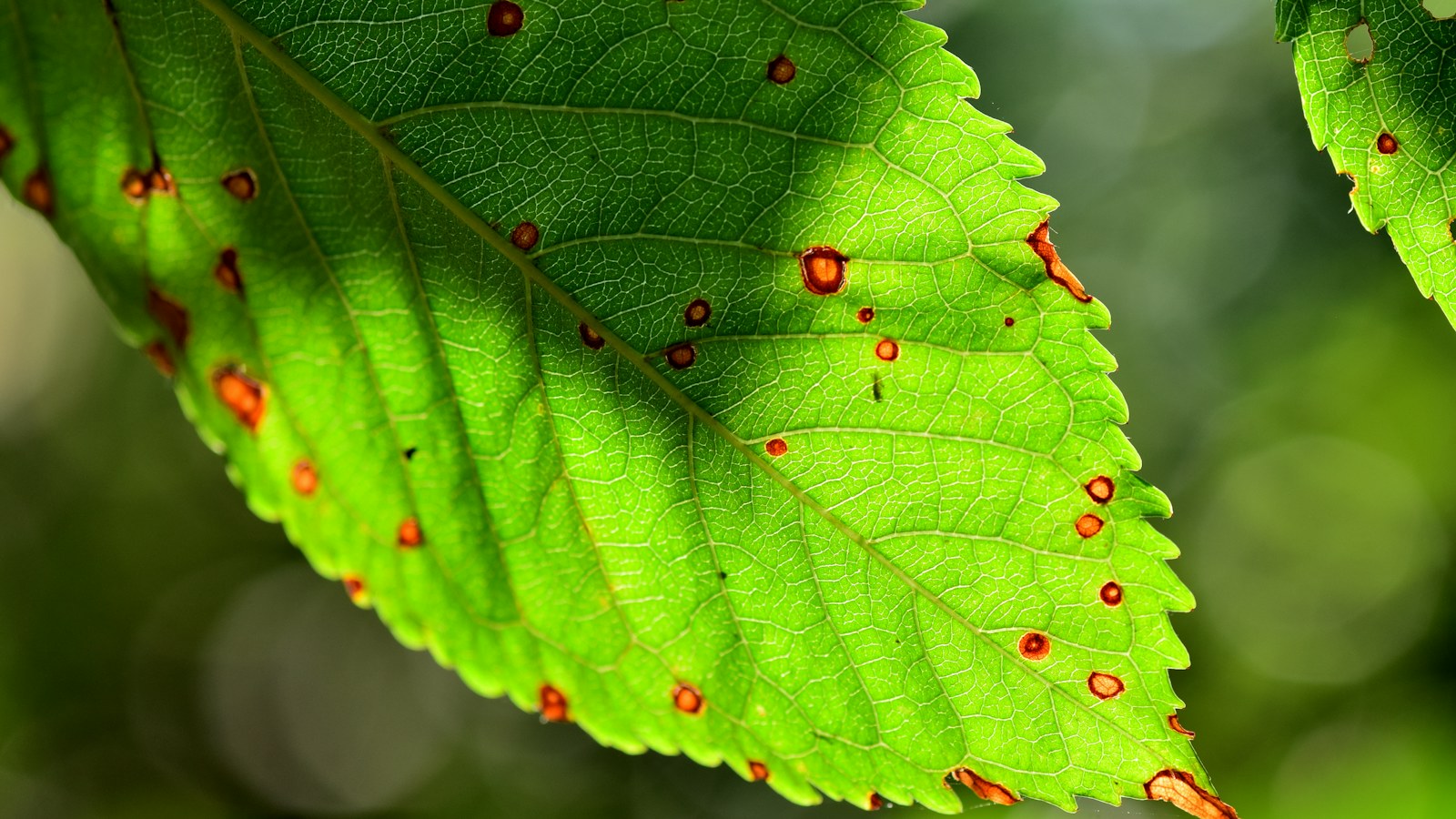
What it looks like: round or irregular brown, black, tan or purple spots, often with a yellow halo or a darker edge. Some have rings like a target. Over time spots join together and the leaf yellows and falls.
Plants it loves: tomatoes, chillies, brinjal, beans, roses, strawberries, mango, and houseplants such as peace lily, dracaena and dieffenbachia.
Fungal or bacterial? Many leaf spots are fungal, but some are caused by bacteria. Bacterial spots often look wet, dark and greasy, may be limited by the leaf veins into angular shapes, and spread fast in warm, wet weather. Treatment is similar: remove infected leaves, keep leaves dry and don't spread water from plant to plant.
What to do:
- Cut off spotted leaves with clean scissors. Wipe the blades with alcohol between plants.
- Water the soil, not the leaves, and do it in the morning so anything that splashes dries quickly.
- Mulch around vegetables so rain and watering don't splash soil spores up onto lower leaves.
- Space plants out and remove the lowest leaves of tomatoes so air can move.
- For spreading cases on vegetables, a copper-based fungicide can slow it down. Follow the label for dose and the waiting time before harvest.
3. Rust
What it looks like: small orange, rusty or brown raised bumps, mostly on the underside of leaves, with pale or yellow spots on top. Rub one with a white tissue and it leaves an orange powder.
Plants it loves: roses, beans, wheat and other grasses, geraniums, snapdragons, mint and some fruit trees.
What to do: remove infected leaves, keep foliage dry, improve air flow and clean up fallen leaves. Sulfur-based fungicides are often used for rust; don't use sulfur within a couple of weeks of a neem oil spray, as the mix can burn leaves.
4. Downy mildew
Despite the name, it is unrelated to powdery mildew: it is caused by a fungus-like water mould, and it's common on cucumbers, gourds, melons and grapes during the monsoon.
What it looks like: yellow, angular patches on the top of the leaf, boxed in by the veins, with grey-purple fuzz underneath, usually visible in the early morning. Leaves soon turn brown and die.
What to do: it needs wet leaves, so stop wetting the foliage, remove infected leaves quickly and give plants room to dry. A copper spray can protect healthy leaves. Neem and baking soda work far less well on downy mildew than on powdery mildew.
How to tell them apart
| Sign | Most likely | First step |
|---|---|---|
| White powder you can wipe off | Powdery mildew | Neem or baking soda spray, more air |
| Brown spots with a yellow ring | Leaf spot | Remove leaves, keep foliage dry |
| Orange bumps under the leaf | Rust | Remove leaves, improve air flow |
| Yellow patches on top, grey fuzz below | Downy mildew | Keep leaves dry, copper spray |
| Dry, crispy brown edges, no spots | Not a fungus (water, heat or salts) | See our brown leaf tips guide |
| Fine yellow speckles and tiny webs | Spider mites | See our mealybugs and spider mites guide |
Problems that look like a fungus but aren't
Before you start spraying, rule out these common look-alikes:
- Sunburn: pale, bleached or brown patches on the side facing the sun, often after moving a plant outdoors. No spreading, no rings.
- Nutrient problems: yellowing between the veins or on old leaves, evenly across the plant. Our guide to why plant leaves turn yellow explains the patterns.
- Water marks and dust: hard-water spots or dust wipe off with a damp cloth and don't come back.
- Pest damage: stippling, holes or sticky residue usually mean insects, not fungus.
How to prevent fungal leaf diseases
- Water in the morning, at the base of the plant. Leaves that dry quickly rarely get infected. Our watering guide shows how to check the soil before watering.
- Don't crowd plants. Give pots and seedlings space, and prune dense growth.
- Give enough light. Healthy, well-lit plants resist infection better.
- Clean up. Pick up fallen leaves and remove old crop remains at the end of the season.
- Rotate crops. Don't grow tomatoes, chillies or gourds in the same soil year after year.
- Choose the right season. In Pakistan, monsoon humidity brings a spike in mildew and leaf spot; plan sowings with our kitchen garden calendar and keep an eye on leaves after every rain.
- Spray before trouble starts. On plants that get mildew every year, like cucumbers and roses, a neem or baking soda spray every 1–2 weeks in risky weather helps prevent it.
Know your risky months. In the plains of Pakistan, watch for powdery mildew on peas in late winter, on mango trees at flowering (February–March), and on gourds and cucumbers in the mild spells of spring and autumn. Downy mildew and leaf spot peak after monsoon rain. When a seed packet says a variety is mildew-resistant, choose it: the RHS puts resistant varieties at the top of its list, and they save more spraying than anything else.
When to give up on a plant
If more than about half the leaves are infected, the stems are affected or the plant keeps getting worse after 3–4 weeks of treatment, it is often better to remove the whole plant so the disease doesn't spread to its neighbours. Bin it, clean the pot with soapy water, and start again with fresh potting mix.
Let GreenScan help
Spots, powder or patches you can't place? Take a photo of the leaf with the GreenScan Plant AI app. It looks for signs of disease, pests and stress, tells you how serious it is and gives you a step-by-step treatment plan. Recheck with a new photo after a week to see if it is improving, or ask Ask Botanist in English or Urdu what to do next.
FAQ
Can a leaf with powdery mildew recover? No. The spots won't disappear from leaves that are already covered. Remove the worst leaves and protect new growth with regular sprays. The plant itself usually recovers well.
Is baking soda spray safe for plants? In small amounts, yes: about 1 teaspoon of baking soda per litre of water, with 1 teaspoon of horticultural or neem oil and a few drops of soap. Stronger mixes can burn leaves and build up sodium in the soil, so don't overuse it, and test on one leaf first.
Should I water plants with fungal disease less? Water just as the plant needs, but at the base and in the morning. The goal is dry leaves, not dry soil. Underwatering stresses the plant and makes things worse.
Can I compost leaves with mildew or leaf spot? It's safer not to. Home compost often doesn't get hot enough to kill the spores. Put infected leaves in the bin.
Is it safe to eat vegetables from a plant with leaf spot? Usually yes, if the fruit itself looks healthy. Wash it well, and follow the waiting time on any fungicide label before harvesting.
Sources and further reading
- Powdery Mildew on Landscape and Garden Plants, Clemson Cooperative Extension Home & Garden Information Center
- Powdery Mildew on Ornamentals (Pest Notes 7406), UC Statewide IPM Program, University of California
- Downy mildews, Royal Horticultural Society
- Watch: Powdery Mildew Home Remedies, University of Wisconsin–Madison Extension (Horticulture)
Cover photo: Nicole Sara / Unsplash.