Quick answer: Herbs grow well indoors if you give them your sunniest window (at least 6 hours of light), a pot with a drainage hole, and light, airy potting mix. The easiest to start with are mint, chives, basil and parsley. Water when the top 2–3 cm of soil is dry (Mediterranean herbs like rosemary, thyme and oregano prefer it drier), and harvest often by pinching the tips, never taking more than a third of the plant at once. If your window is dim, a simple LED grow light for 12–14 hours a day makes a big difference.
Fresh herbs make every meal better, and a few pots on the kitchen windowsill mean you never have to buy a sad, wilted bunch again. Herbs are also one of the best ways to start growing food: they're small, fast and forgiving. This guide covers the setup, eight easy herbs with their own care notes, and how to keep harvesting for months.
The setup: light, pots and soil
Light is everything. Most herbs come from sunny places and need much more light than typical houseplants.
- Best: a window that gets direct sun for 6 hours or more. In the northern hemisphere that is a south-facing window, or west-facing for afternoon sun (in the southern hemisphere, north-facing).
- Okay: an east-facing window with morning sun, for mint, parsley and chives.
- Too dark? Leggy, pale stems that lean hard towards the glass mean the herb needs more light. A small LED grow light placed 15–30 cm above the plants, on for 12–14 hours a day with a timer, works very well.
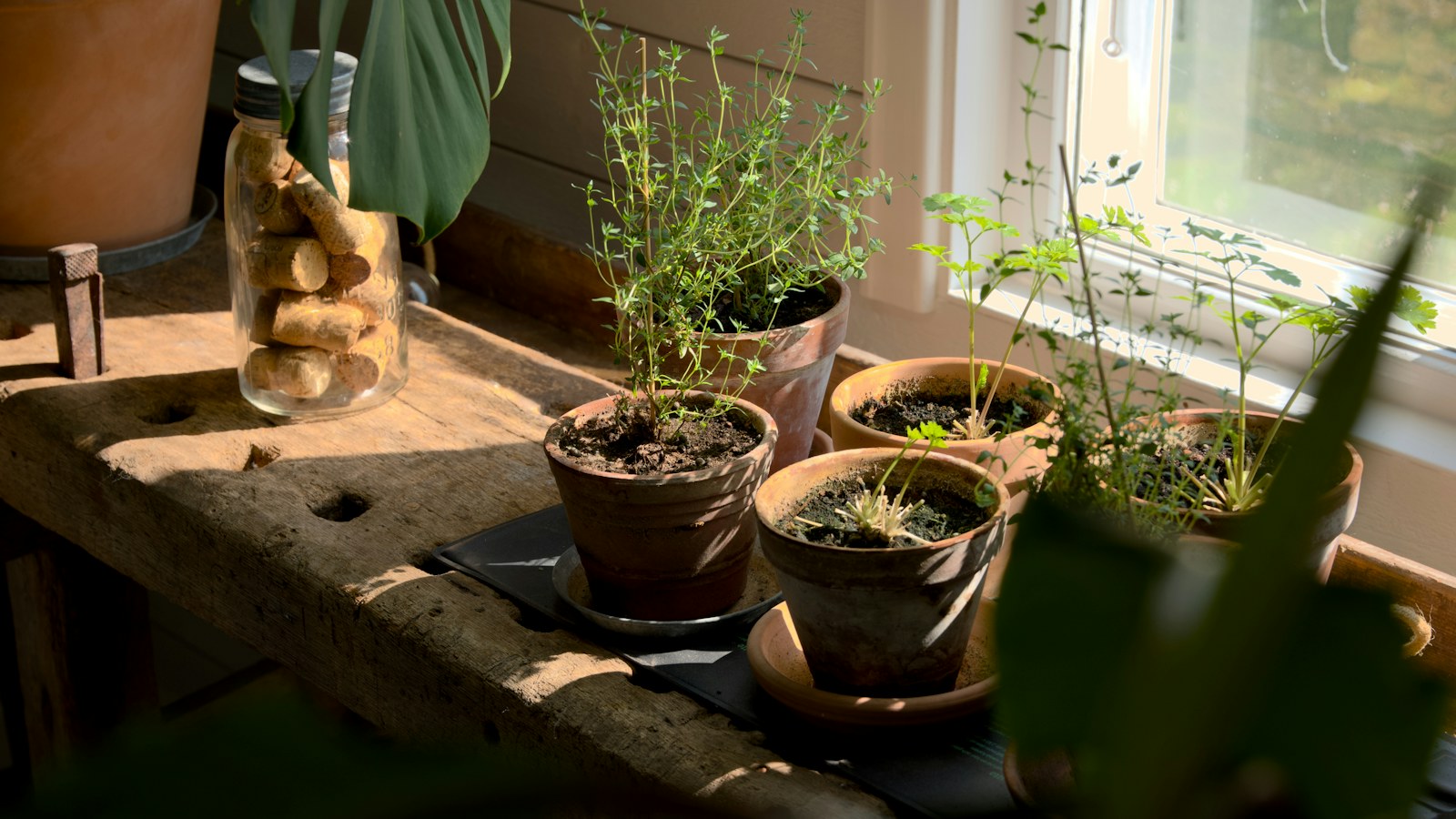
Pots: choose pots at least 12–15 cm (5–6 inches) wide, with drainage holes. Terracotta suits rosemary, thyme and oregano because it dries faster. Plastic or glazed pots keep basil, mint and parsley moist for longer. Put a saucer underneath and empty it after watering.
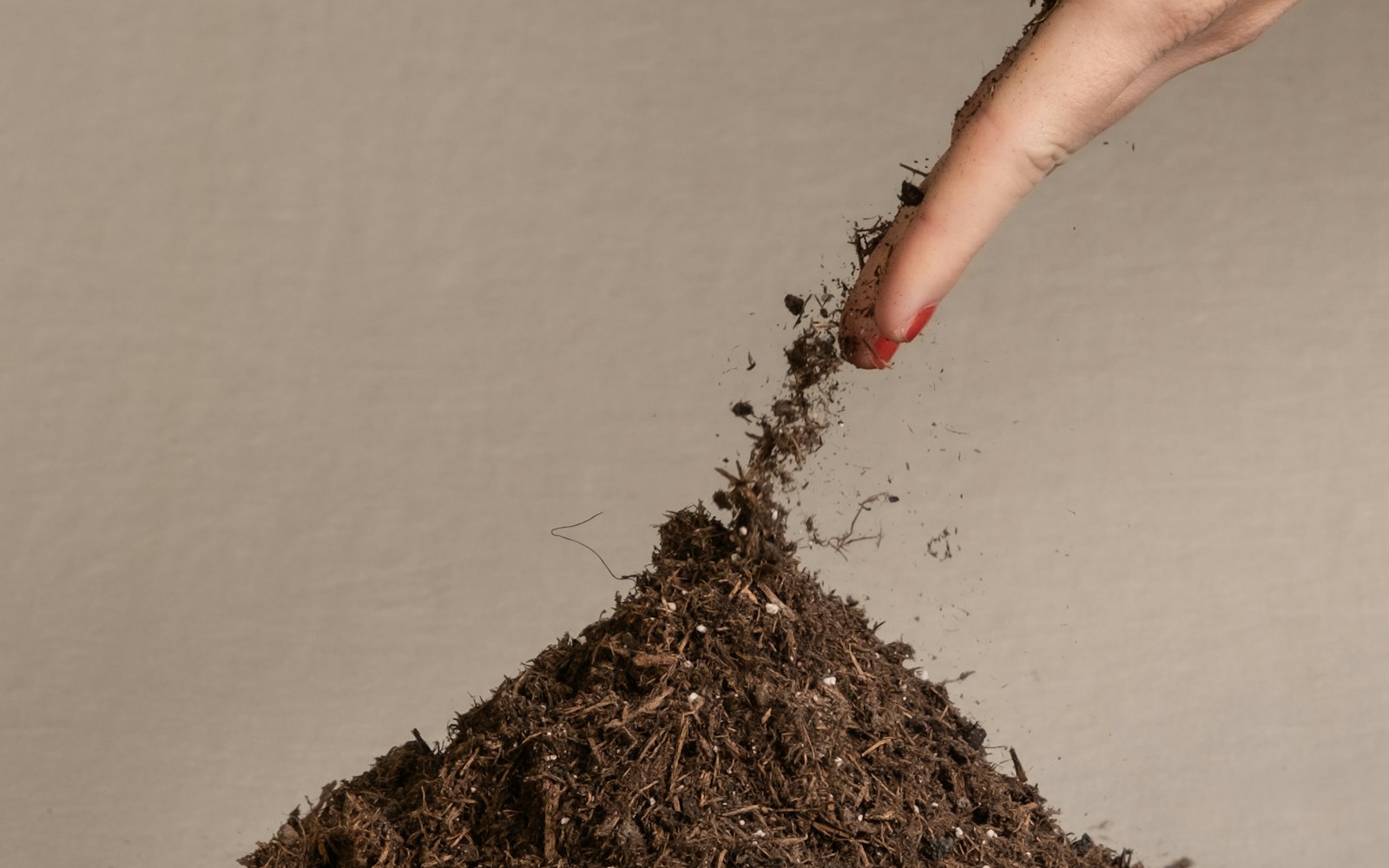
Soil: use a light potting mix with a handful of perlite. For rosemary, thyme and oregano, add extra perlite or grit. Never use garden soil. Our potting mix guide has simple recipes.
Seeds, cuttings or nursery plants? Nursery seedlings are the fastest start. Basil, coriander, parsley and chives are easy and cheap from seed. Mint, rosemary and oregano are easiest from a cutting or a young plant.
8 easy herbs to grow on a windowsill
| Herb | Light | Water | Difficulty |
|---|---|---|---|
| Mint | Medium to bright | Keep evenly moist | Very easy |
| Chives | Bright | Keep lightly moist | Very easy |
| Basil | Very bright, warm | Keep lightly moist | Easy |
| Parsley | Medium to bright | Keep lightly moist | Easy (slow to sprout) |
| Coriander (cilantro) | Bright, cool | Keep lightly moist | Medium: bolts in heat |
| Oregano | Very bright | Let the top dry out | Easy |
| Thyme | Very bright | Let the top dry out | Easy |
| Rosemary | Very bright | Let the top dry out, never bone dry | Medium: hates wet roots |
Mint
Mint is almost impossible to kill and grows fast. It spreads aggressively, so always give it a pot of its own. It tolerates less light than most herbs and likes evenly moist soil. Cut stems back hard whenever it gets tall and straggly; it regrows quickly. Mint also roots easily in a glass of water.

Chives
A clump of chives keeps growing back for years. Snip leaves from the outside of the clump, about 3–5 cm above the soil, and new ones grow from the centre. Their pretty purple flowers are edible, but snipping them off keeps the leaves tender.
Basil
Basil loves heat and strong light and sulks in cold windows: keep it above about 10–12°C and away from cold glass in winter. Pinch the top pair of leaves just above a leaf joint regularly; each cut makes two new shoots and a bushier plant. Pinch off flower buds as soon as you see them, because flowering makes the leaves less tasty. Water when the surface feels dry, at the base rather than over the leaves.

Parsley
Parsley seeds are slow to sprout, often 2–4 weeks. Soaking them overnight in warm water helps. It grows well in a little less light than basil. Harvest the outer stems at the base and let the inner ones grow. Flat-leaf parsley usually has a stronger flavour; curly parsley looks prettier.
Coriander (cilantro)
Coriander loves cool weather and quickly runs to seed ("bolts") in heat, so it is easiest from autumn to spring in hot climates. It doesn't like being moved, so sow seeds straight into its final pot, about 1 cm deep. Because each sowing lasts only a few weeks, sow a little every 3–4 weeks for a steady supply. If it does flower, let it set seeds: that's dried coriander seed for your kitchen.
Oregano
Oregano wants lots of sun and soil that dries out between waterings. It's a perennial that keeps going for years. Trim it often to stop it getting woody; the flavour is strongest just before it flowers.
Thyme
Thyme is small, tough and loves a sunny, dry spot. Use a gritty mix in a terracotta pot and water only when the top few centimetres are dry. Trim the soft green tips, not the woody base, so it doesn't go bare in the middle.
Rosemary
Rosemary is the trickiest indoors because it wants bright sun and good air flow, yet hates wet roots. Use a fast-draining mix in terracotta, water deeply once the top few centimetres are dry, but don't let the whole pot dry out completely (indoor rosemary often dies after one bone-dry spell), and give it the brightest spot you have. Indoors in dry winter air it can get powdery mildew, a white dusty coating; better air flow helps.
Desi favourites: tulsi, pudina and methi
Tulsi (holy basil) needs the same care as basil: warmth, strong sun and regular pinching. It gets woodier and lives longer, so give it a slightly bigger pot. Pudina is simply mint, so give it a pot of its own and cut it back often.
Methi (fenugreek) is one of the easiest kitchen crops for a sunny sill. Sow the seeds thickly in a shallow tray, keep them lightly moist and snip the young leaves after about 3–4 weeks. Like coriander, methi grows best in the cooler months.
How to harvest without killing the plant
- Wait until the plant is established, about 15 cm tall or with plenty of leaves, before your first harvest.
- Never take more than one-third of the plant at once. Leave enough leaves for it to keep growing.
- Cut just above a leaf joint (where leaves meet the stem). New shoots grow from there.
- Harvest little and often. Regular trimming keeps herbs compact and productive.
- Pick in the morning for the best flavour, and use or store herbs quickly.
Watering and feeding
- Basil, mint, parsley, coriander and chives like evenly moist soil; water when the top 2–3 cm feel dry.
- Rosemary, thyme and oregano prefer to dry out more; overwatering is their biggest danger. See root rot if leaves go soft and dark.
- Small pots on sunny windows dry fast, sometimes daily in summer. Our guide on how often to water plants explains the finger test.
- Feed lightly. A half-strength liquid fertiliser every 3–4 weeks in spring and summer is plenty for leafy herbs; Mediterranean herbs need even less. Too much feeding can weaken the flavour. More in our fertiliser guide.
Common problems
| Problem | Likely cause | What to do |
|---|---|---|
| Tall, thin, pale stems leaning to the window | Not enough light | Move to a sunnier window or add a grow light; pinch tips to encourage bushiness |
| Yellowing lower leaves, soggy soil | Overwatering or no drainage | Let it dry out; check the pot has a drainage hole |
| Leaves wilting and crispy at the edges | Too dry, or too hot right against the glass | Water more often; move it a little back from very hot glass in summer |
| Coriander or basil suddenly flowering | Heat, long days or stress | Pinch basil flowers off; sow new coriander every few weeks |
| Black or brown spots on basil leaves | Cold damage or wet leaves | Keep it warm; water the soil, not the leaves |
| White powder on leaves | Powdery mildew | Improve air flow; remove affected leaves; avoid crowding |
| Tiny insects under leaves, sticky leaves | Aphids, whiteflies or spider mites | Rinse with water; use insecticidal soap. See mealybugs and spider mites |
Hot-climate windowsills. In a Pakistani or Indian summer, glass in a south- or west-facing window can get hot enough to scorch leaves and dry small pots by noon. From May to early June, move herbs a little back from the glass or to an east-facing window with morning sun, and water in the morning. Coriander does best sown from September to January in the plains. For pests or white powder, see our neem oil spray guide and powdery mildew guide, and patch test soft herbs first.
Let GreenScan help
Not sure if it's basil or holy basil, or why your mint has spots? Scan it with the GreenScan Plant AI app to identify the herb and check its health, or ask Ask Botanist what to do next. You can set watering reminders too, which is handy for small pots on a hot windowsill.
FAQ
Can I grow herbs indoors without a sunny window? Yes, with a grow light. A simple LED grow light on a timer for 12–14 hours a day can replace a sunny window. Without one, stick to mint, parsley and chives, which manage with less light.
Why does my supermarket basil die so quickly? Those pots usually contain dozens of seedlings crammed together. Gently split the clump into 3–4 smaller groups, repot each into its own pot with fresh mix, and put them in your sunniest spot. They'll last much longer.
Can I grow different herbs in one pot? Yes, if they like the same conditions. Rosemary, thyme and oregano go well together in a gritty mix; basil and parsley also pair well. Keep mint on its own because it spreads and takes over.
How often should I water indoor herbs? There's no fixed schedule. Check with your finger: water leafy herbs when the top 2–3 cm are dry, and let rosemary, thyme and oregano dry out further. In summer, small pots in sun may need water every day.
Are herbs safe for my cat or dog? Some are and some aren't. The ASPCA lists basil, rosemary and thyme as non-toxic. Mint and oregano can cause vomiting and diarrhoea, and chives, as members of the onion family, can damage red blood cells in cats and dogs. See our pet-safe houseplants guide and keep pots out of reach if your pet likes to chew.
Sources and further reading
- Growing Herbs Indoors, Penn State Extension
- Herbs all winter: grow them indoors, University of Illinois Extension
- Oregano, ASPCA Animal Poison Control
- Chives, ASPCA Animal Poison Control
Cover photo: Magnus Jonasson / Unsplash.