Quick answer: To grow tomatoes in pots, choose a compact or cherry variety, use a pot of at least 20 litres (about 5 gallons) with drainage holes, fill it with potting mix plus compost (never garden soil), and give it 6–8 hours of direct sun. Plant deep, add a stake or cage on day one, water deeply and regularly so the soil never swings from soaking to bone-dry, and switch to a potassium-rich feed once flowers appear. Time it right: tomatoes set fruit best when days are about 21–30°C, so in very hot climates grow them through the cooler months.
A balcony, a sunny roof or a few steps by the door is enough for a real harvest. One healthy cherry tomato plant in a big pot can give you hundreds of tomatoes over a season, and nothing from a shop tastes like a tomato you picked warm from the vine. This guide walks you through it from choosing a plant to picking your first ripe fruit.
What you'll need
- A pot: 20 litres minimum for compact and cherry types; 30–40 litres or more for large, tall varieties. Bigger pots dry out more slowly, which means fewer problems.
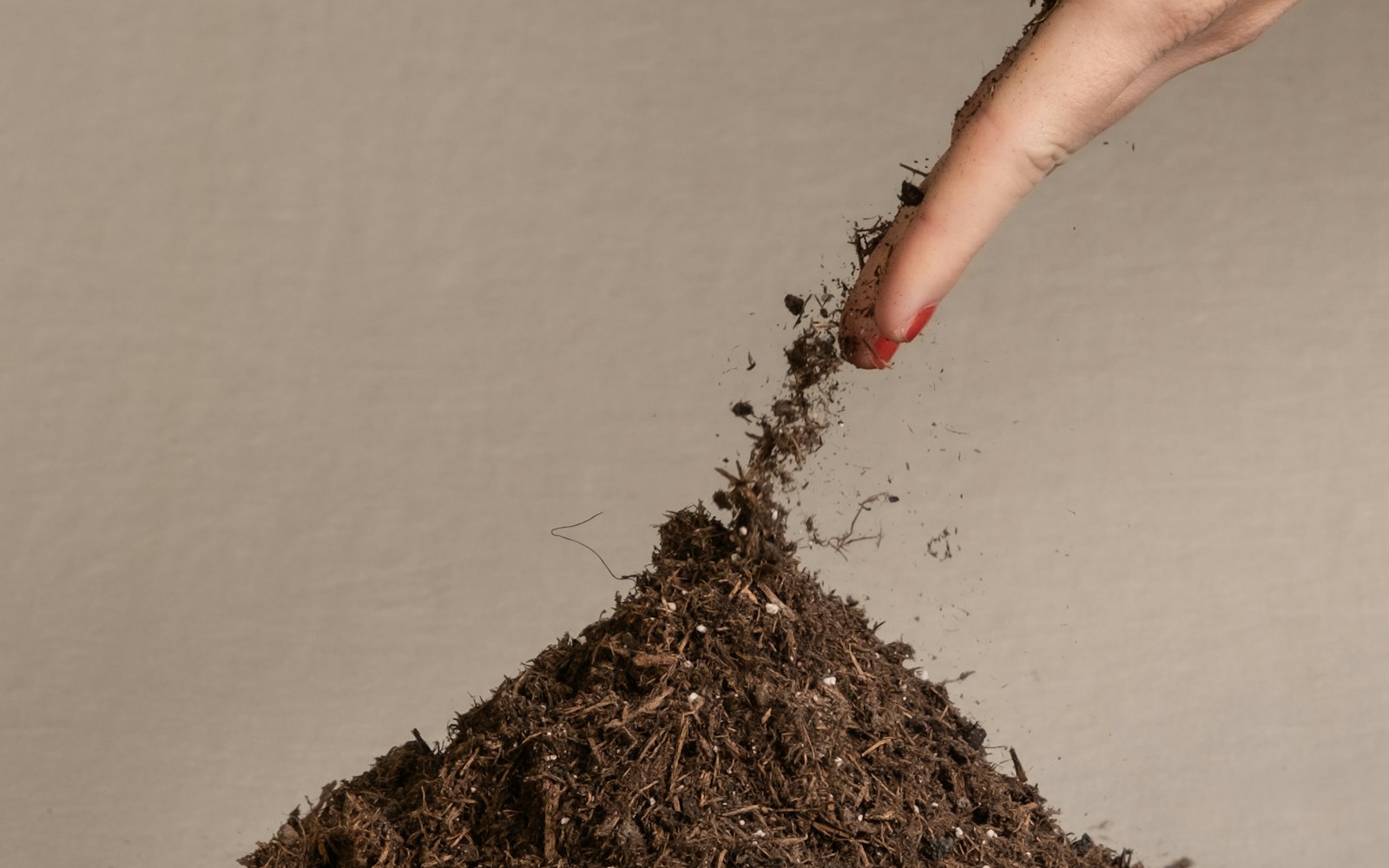
- Potting mix: good quality potting mix with about one-quarter compost or well-rotted manure, plus a handful of perlite. See recipe 5 in our potting mix guide.
- Support: a 1.5–2 m stake, a tomato cage or a trellis.
- Fertiliser: a balanced feed to start, then a tomato feed (higher in potassium).
- Mulch: dry leaves, straw or coco chips to cover the soil.
- A sunny spot: at least 6 hours of direct sun; 8 is better.
No big pot? Use what you have. A fabric grow bag or a clean, food-grade 20-litre bucket works as well as a shop-bought pot, as long as you make 4–6 drainage holes in the base. Fabric bags keep roots cooler and stop them circling, but they dry out faster, so check them daily in summer. In hot climates, avoid black plastic pots in full sun: they heat up and can damage the roots. A light-coloured pot, or one shaded by a plank or a larger outer pot, stays much cooler.
Step 1: Choose the right variety
Tomatoes come in two main growth types, and for pots this matters more than anything else.
| Type | How it grows | Best for pots? |
|---|---|---|
| Determinate (bush) | Grows to a set height (often 60–120 cm), fruits over a few weeks, then slows down | Yes. Compact and easy; good for smaller pots and windy balconies |
| Indeterminate (vine) | Keeps growing and fruiting until cold, heat or disease stops it; can pass 2 m | Yes, in a large pot (30–40 L+) with a tall stake |
| Dwarf and patio types | Bred to stay small, sometimes under 50 cm | Excellent; even for 10–15 L pots and hanging baskets |
| Cherry tomatoes | Usually indeterminate, but very productive and quick to ripen | The easiest choice for beginners |
If your summers are very hot, look for heat-tolerant varieties. If a virus called tomato leaf curl is common where you live (it is spread by whiteflies and widespread in South Asia and the Middle East), look for seed packets marked resistant or tolerant to leaf curl virus (often shown as TYLCV or ToLCV). Resistance reduces damage but doesn't make plants immune, so keep whiteflies under control too.
Step 2: Start from seed or buy a young plant

- From seed: sow seeds about 5 mm deep in small pots or trays of seed-starting mix, keep them warm (20–30°C) and moist, and they'll sprout in about 5–10 days. Give them the brightest light you have so they don't get tall and floppy. They're ready to move to their final pot after about 5–7 weeks, when they are 15–20 cm tall.
- From a nursery: choose short, stocky plants with dark green leaves and no flowers or fruit yet. Avoid tall, pale or yellowing plants.
- Harden them off. Seedlings grown indoors need a week of getting used to the outdoors. Put them outside in shade for a few hours, then a little more sun each day.
When to plant: tomatoes like warmth but struggle in extreme heat. Flowers often drop without setting fruit when days go above about 32–35°C or nights stay above about 24°C, and plants sulk when nights fall below about 10–13°C. In mild climates, plant after the last frost in spring. In hot places like the plains of Pakistan and India or the Gulf, many gardeners sow in late summer for an autumn and winter crop, or in mid-winter for a spring crop, and avoid fruiting in the hottest months. Our guide to protecting plants in extreme heat helps if a heatwave arrives mid-season.
Timing in Pakistan. In the plains of Punjab and Sindh, the Punjab Agriculture Department advises sowing the nursery in late October–November, protecting the seedlings from frost through the winter, and moving them into their final pots in early February. They then fruit before the worst of the May–June heat. In cooler northern areas, plant out in April–May, after the last frost. See our vegetable planting calendar for Pakistan for what else to sow each month.
Step 3: Plant deep
Tomatoes are unusual: they grow roots all along any part of the stem that is buried.
- Fill the pot with moist mix, leaving about 5 cm at the top.
- Remove the lowest leaves from the seedling.
- Bury the stem so only the top few sets of leaves are above the soil, up to two-thirds of the plant. More buried stem means more roots and a stronger plant.
- Push the stake in now, a few centimetres from the stem, so you don't damage roots later.
- Water well, then add a 3–5 cm layer of mulch, keeping it a finger's width away from the stem.
Step 4: Sun, water and feeding
Sun: put the pot in your sunniest spot. In hot climates, light afternoon shade in the peak of summer helps prevent scorching. Turn it now and then if it leans.
Water: this is where most pot-grown tomatoes go wrong. Water deeply until it drains from the bottom, then again when the top 2–3 cm of soil feel dry. In summer, a large plant in a pot may need water every day, sometimes twice. The goal is even moisture: big swings between dry and soaked cause cracked fruit and blossom-end rot. Our guide on how often to water plants explains the finger test.
Feeding: potting mix runs out of nutrients quickly.
- First 3–4 weeks: if your mix has compost or slow-release fertiliser, you don't need much else.
- Once the first flowers open: feed with a tomato fertiliser (higher in potassium) every 1–2 weeks, following the label. Potassium supports flowers and fruit.
- Avoid too much nitrogen (for example, lots of manure or "green" fertiliser later in the season). It gives a big, leafy plant with few tomatoes.
Step 5: Support and pruning
- Tie the main stem to the stake every 20–30 cm with soft string or strips of cloth, in a loose figure of eight.
- Indeterminate (vine) types: pinch out suckers, the small shoots that appear in the joint between a leaf and the main stem, while they are small. Keeping one or two main stems gives bigger fruit and better air flow. When the plant reaches the top of its stake, pinch out the growing tip.
- Determinate (bush) types: don't remove suckers, as they carry much of the crop. Just remove leaves touching the soil.
- Remove yellowing lower leaves as the plant grows. It improves air flow and reduces disease.
Step 6: Flowers, fruit and harvest

- Help pollination. Tomato flowers pollinate themselves, but they need a little movement. On a still balcony with no bees, gently tap the flower stems or the stake around midday every few days.
- Fruit takes time. From flower to ripe fruit is usually 6–8 weeks; cherry tomatoes are quicker.
- Harvest when the fruit is fully coloured and gives slightly when squeezed. You can also pick tomatoes as soon as they start to change colour and let them ripen indoors at room temperature. This is useful in very hot weather or when birds find them first.
- Don't refrigerate ripe tomatoes if you can avoid it; cold dulls the flavour.
Common problems and fixes
| Problem | Likely cause | What to do |
|---|---|---|
| Black, sunken patch at the bottom of the fruit (blossom-end rot) | Uneven watering stops the plant moving calcium into the fruit | Water deeply and regularly; mulch; a bigger pot helps. Remove affected fruit |
| Fruit splits or cracks | Heavy watering or rain after a dry spell | Keep moisture even; pick fruit as it starts colouring |
| Flowers drop without fruit | Too hot or too cold, or no pollination | Tap flowers; give afternoon shade in heat; wait for milder weather |
| Lower leaves yellow | Old leaves, lack of nitrogen, or overwatering | Remove them; feed regularly; check drainage. See why leaves turn yellow |
| Young leaves curl up, yellow and stay small; plant stops growing | Tomato leaf curl virus, spread by whiteflies | No cure: remove the plant to protect others. Control whiteflies; grow resistant varieties |
| Brown spots with rings on lower leaves | Early blight (a fungus) | Remove affected leaves; water the soil, not the leaves; don't crowd plants |
| Sticky leaves, tiny insects underneath | Aphids or whiteflies | Spray off with water; use insecticidal soap. See our guide to pests on houseplants |
| Lots of leaves, few flowers | Too much nitrogen or not enough sun | Switch to tomato feed; move to a sunnier spot |
Spots on the leaves? See our guide to powdery mildew, leaf spot and rust. For aphids and whiteflies, try a neem oil spray.
Let GreenScan help
Spots on the leaves or fruit that won't ripen? Take a photo with the GreenScan Plant AI app for a health check, or ask Ask Botanist about your tomato plant and your local weather. Set watering and feeding reminders in the app so the pot never dries out on a hot day.
FAQ
What size pot do tomatoes need? At least 20 litres (about 5 gallons) for compact and cherry varieties, and 30–40 litres or more for large, tall types. Small pots dry out fast and produce smaller crops.
How many tomato plants can I put in one pot? One per pot is best. Two plants in one container compete for water and nutrients, and both usually do worse than a single plant.
Can I grow tomatoes indoors? It's hard without very strong light. A sunny, south-facing window (north-facing in the southern hemisphere) can work for dwarf varieties, but most tomatoes need 6–8 hours of direct sun or a strong grow light to fruit well.
Why are my tomatoes not turning red? Ripening slows when it is very hot (above about 30–35°C) or cool. Fruit will still ripen if you pick it once it starts changing colour and keep it indoors at room temperature.
Can I reuse the potting mix next year? It is better not to for tomatoes, because diseases can carry over. Use fresh mix, or put the old mix on garden beds or the compost heap and grow something else in that pot.
Sources and further reading
- How to grow tomatoes, Royal Horticultural Society (RHS)
- My tomato plants are flowering, but aren't setting fruit. Why?, Iowa State University Extension and Outreach
- Root Rots on Houseplants, University of Wisconsin–Madison Plant Disease Diagnostics Clinic
- Tomato leaf curl New Delhi virus (TOLCND): distribution, EPPO Global Database (European and Mediterranean Plant Protection Organization)
Cover photo: Dan Gold / Unsplash.