Quick answer: A money plant (pothos) likes bright, indirect light, water when the top 3–5 cm of soil is dry, and a pot with a drainage hole. It grows easily from cuttings in a glass of water. Yellow leaves usually mean too much water; small leaves and long bare stems usually mean too little light.
If you're new to houseplants, start here. The money plant forgives missed waterings, handles dim rooms better than most plants, and can be multiplied for free with a pair of scissors and a glass of water. With a little care, it trails beautifully from a shelf or climbs a pole with leaves much larger than you'd expect.
Which plant is the "money plant"?
The name means different plants in different places, so it helps to be sure:
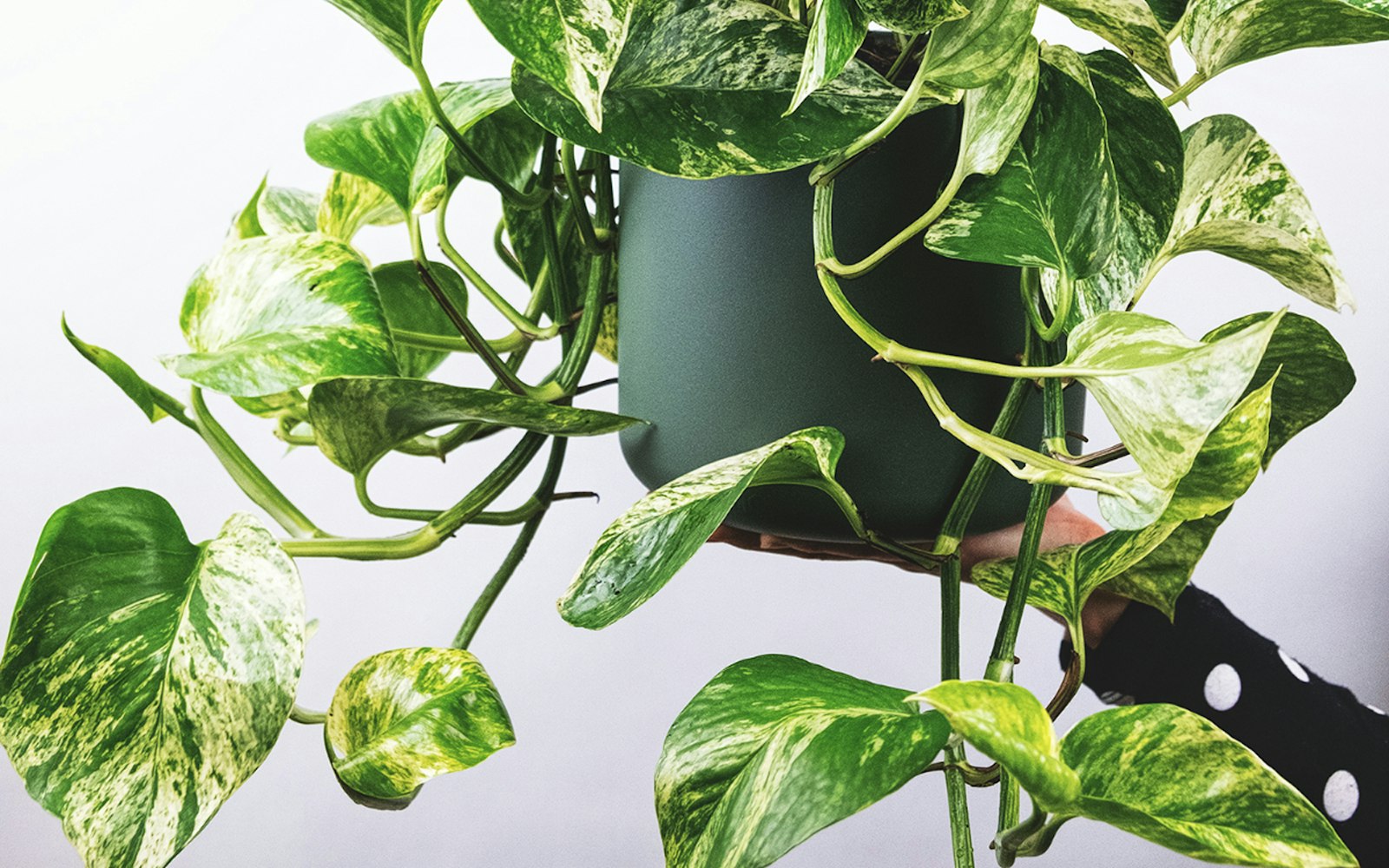
- Pothos (Epipremnum aureum), also called golden pothos or devil's ivy, is the plant most people in South Asia and the Middle East call the money plant. It's a vine with heart-shaped leaves, usually green splashed with yellow or white. This guide is about this plant.
- Chinese money plant (Pilea peperomioides) has round, coin-shaped leaves on thin stalks. Different plant, different care.
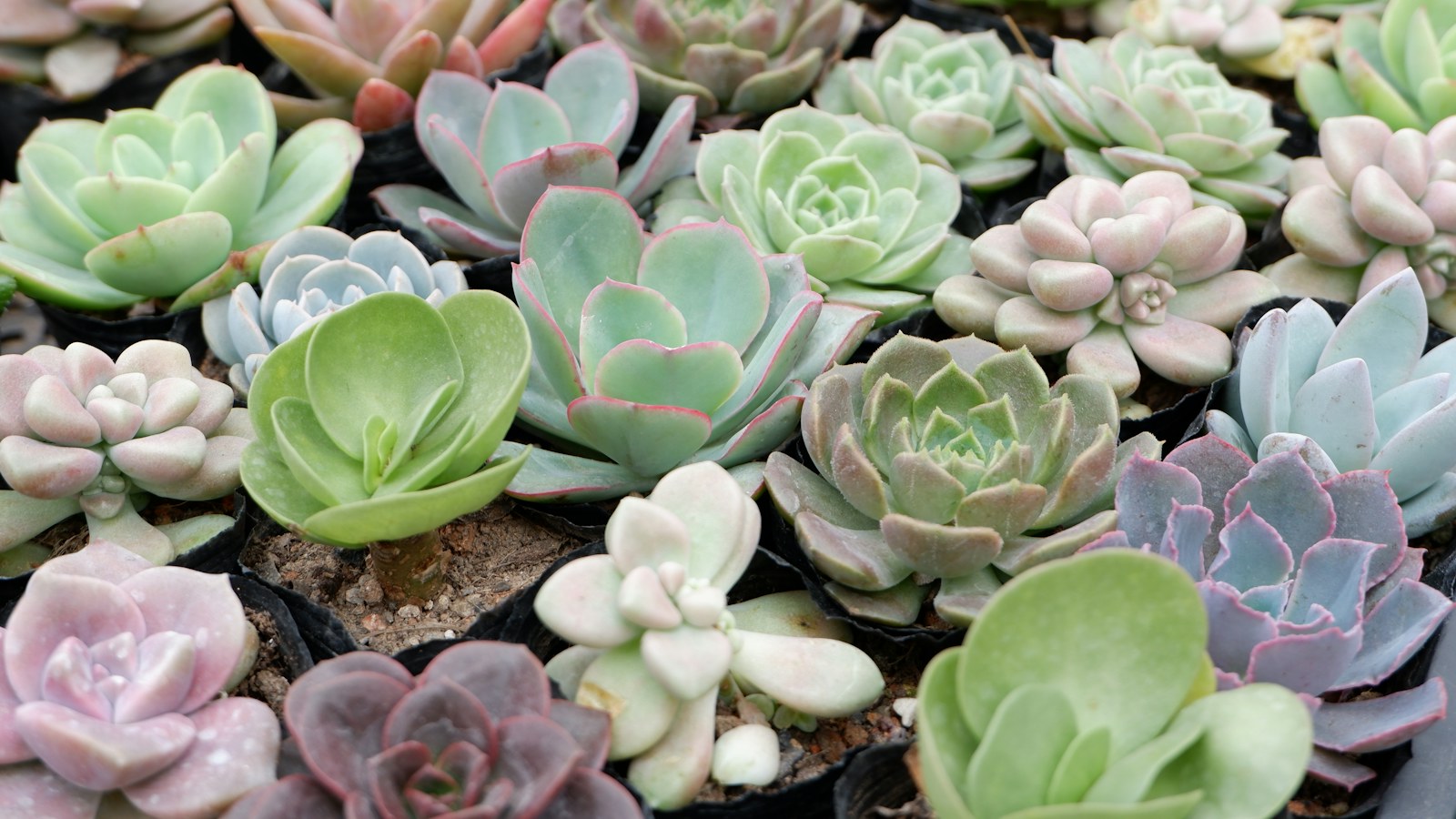
- Jade plant (Crassula ovata) is a succulent sometimes called the money tree or money plant. It needs much less water.
Not sure which one you have? A quick photo scan in a plant ID app will tell you.
Popular varieties
| Variety | What it looks like | Light needs |
|---|---|---|
| Golden pothos | Green with yellow streaks | Tolerant; the toughest |
| Marble Queen | Heavily speckled white and green | Needs brighter light to keep its white |
| Neon | Bright lime-green leaves | Medium to bright |
| Manjula / N'Joy / Pearls and Jade | Cream and green patches, slower growth | Bright, indirect |
| Jade (plain green) | Solid dark green | Handles lower light well |
The more white or yellow in the leaves, the more light the plant needs, because those pale parts can't make food.
Light: bright, indirect is best
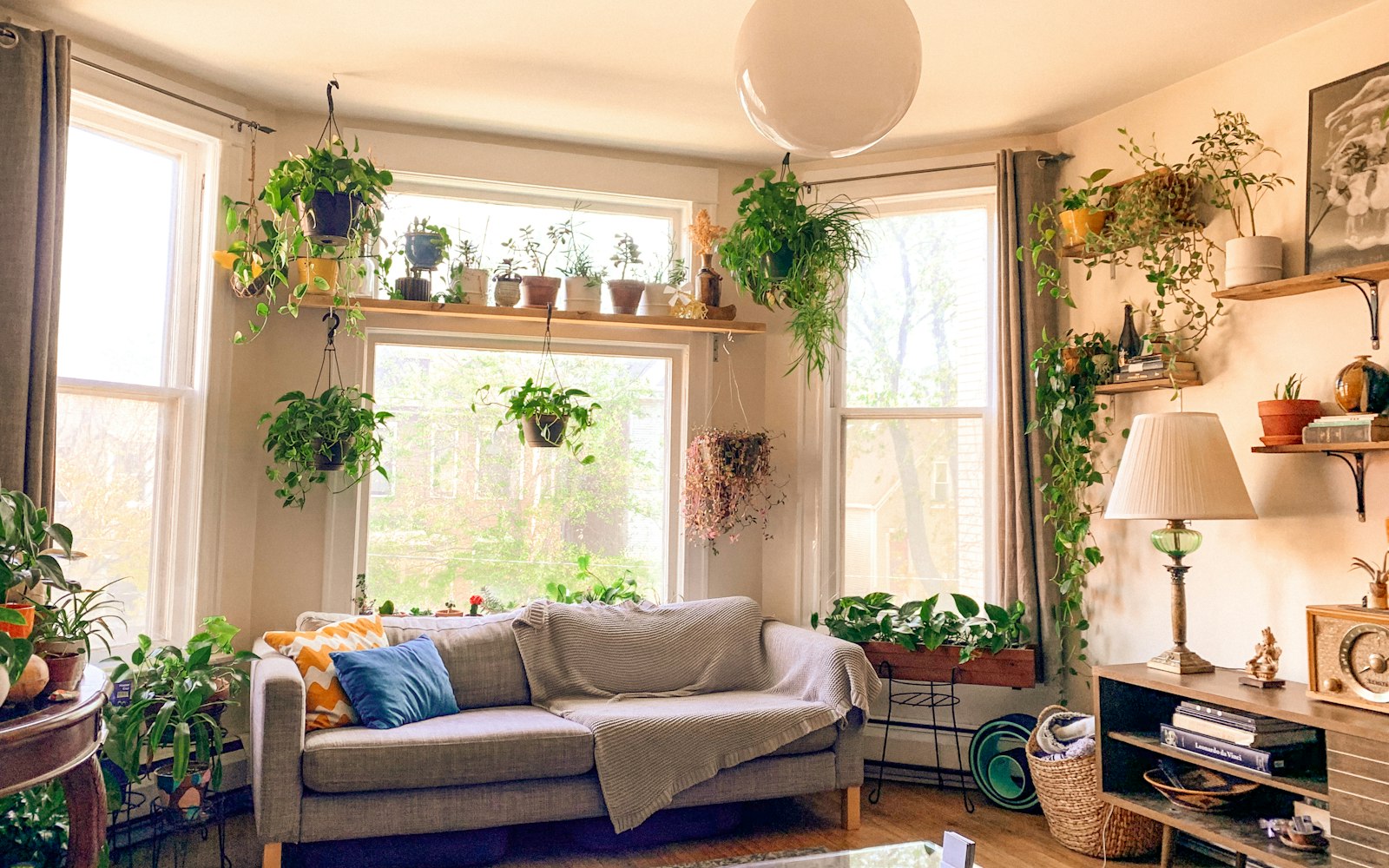
Money plants grow fastest in bright, indirect light: near a window but out of strong direct sun, or behind a sheer curtain. They tolerate lower light, which is why you see them in offices and corridors, but in dim spots they grow slowly, leaves get smaller, stems get long and bare, and variegated types turn plain green.
- Too much direct sun: pale, yellow or bleached leaves with brown, crispy patches.
- Too little light: small leaves, long gaps between leaves, and fading variegation.
A spot a metre or two from an east- or north-facing window is ideal in most homes. In hot climates, keep it away from the afternoon sun.
Watering
Water when the top 3–5 cm of soil is dry. Then water thoroughly until water drains out of the bottom, and empty the saucer. In warm months that is often about once a week; in cool months, every 2–3 weeks. Always check the soil first rather than watering by the calendar.
Money plants tell you when they're thirsty: the leaves droop a little. They usually perk up within hours of a drink. That makes underwatering much less dangerous than overwatering, which slowly rots the roots.
For a deeper guide, see how often to water your plants.
Soil, pot and feeding
- Soil: a light, well-draining potting mix. Adding a handful of perlite, coco chips or orchid bark keeps it airy.
- Pot: any pot with a drainage hole. Repot when roots circle the bottom or grow out of the hole, usually every 1–2 years, going up only one pot size.
- Feeding: a balanced liquid fertiliser at half strength about once a month in spring and summer. Skip feeding in winter or when the plant isn't growing.
Temperature and humidity
Money plants like normal room temperatures of about 18–30°C. They don't like cold: keep them away from cold windows and doors in winter, and below about 10°C growth stops and leaves can be damaged. They handle normal home humidity fine, but keep them out of the direct blast of air conditioners and heaters, which dries and browns the leaf edges.
Trailing or climbing: how to get bigger leaves

In the wild, pothos climbs trees, and its leaves grow much larger as it climbs. At home you can choose:
- Let it trail from a shelf or hanging basket. Easy and pretty, with smaller leaves.
- Let it climb a moss pole, coir pole or wooden plank. Tie the stems loosely and press the small aerial roots against the pole. Climbing stems often produce noticeably bigger leaves over time.
- Pinch and prune to keep it bushy. Cut just above a leaf, and new shoots grow from the node below the cut. Long, bare stems can be cut back and the cuttings rooted (see below).
Growing a money plant outdoors? In much of Pakistan and India, money plants grow happily outside on a shaded verandah, in a courtyard or up a north-facing wall, often climbing a tree or pillar with leaves far bigger than indoors.
Keep them out of the afternoon sun and the hot loo winds of May and June, which scorch the leaves. Where winter nights drop below about 10°C, bring pots indoors or move them against a warm, sheltered wall. For summer care, see how to protect plants in extreme heat.
How to propagate a money plant in water

This is the easiest way to make new plants or fill out a thin pot.
- Find a node. Nodes are the small bumps on the stem where a leaf joins; roots grow from them. You may see a small brown aerial root there already.
- Cut a piece 10–15 cm long with clean scissors, just below a node. Each cutting should have at least one node and one or two leaves.
- Remove the leaf nearest the bottom so no leaves sit underwater.
- Put the cutting in a glass of clean water with the node submerged. Keep it in bright, indirect light.
- Change the water every week, or whenever it looks cloudy.
- Wait for roots. You usually see roots in 1–3 weeks. When they are about 5 cm long, plant the cutting in soil, or leave it in water.
Money plants can live in water for a long time. If you keep one in water long-term, change the water regularly and add a few drops of liquid fertiliser now and then, because water alone has almost no nutrients.
Why do some cuttings rot instead of rooting? Usually the water is dirty, the glass sits in hot direct sun, or the cutting has no node. Cut a fresh piece just below a node, rinse the glass and start again.
Cuttings root fastest in the warm months, roughly March to September in most of South Asia, and slowly in winter. Plant several rooted cuttings together in one pot for a fuller plant, and keep the soil lightly moist for the first two weeks while the water roots adjust to soil.
Common problems and fixes
| Problem | Most likely cause | What to do |
|---|---|---|
| Yellow leaves, soft stems, wet soil | Overwatering | Let soil dry; check drainage; check roots for rot |
| Yellow, then crispy brown leaves; dry soil | Underwatering | Water deeply; check more often |
| Small leaves, long bare stems | Too little light | Move closer to a window; prune and re-root the bare stems |
| Variegated leaves turning plain green | Too little light | Give brighter, indirect light |
| Brown, scorched patches | Too much direct sun | Move out of direct afternoon sun |
| Brown, crispy leaf edges | Dry air or cold/hot air blasts | Move away from AC, heaters and drafts |
| Leaves curling, plant drooping | Thirst | Water; leaves recover within hours |
| White cottony spots, sticky leaves | Mealybugs | Wipe off with alcohol on a cotton bud; repeat weekly |
For more on yellowing, see why plant leaves turn yellow.
Crispy brown edges are covered in our guide to brown leaf tips, and white cottony bugs in mealybugs and spider mites.
Are money plants safe for pets and children?
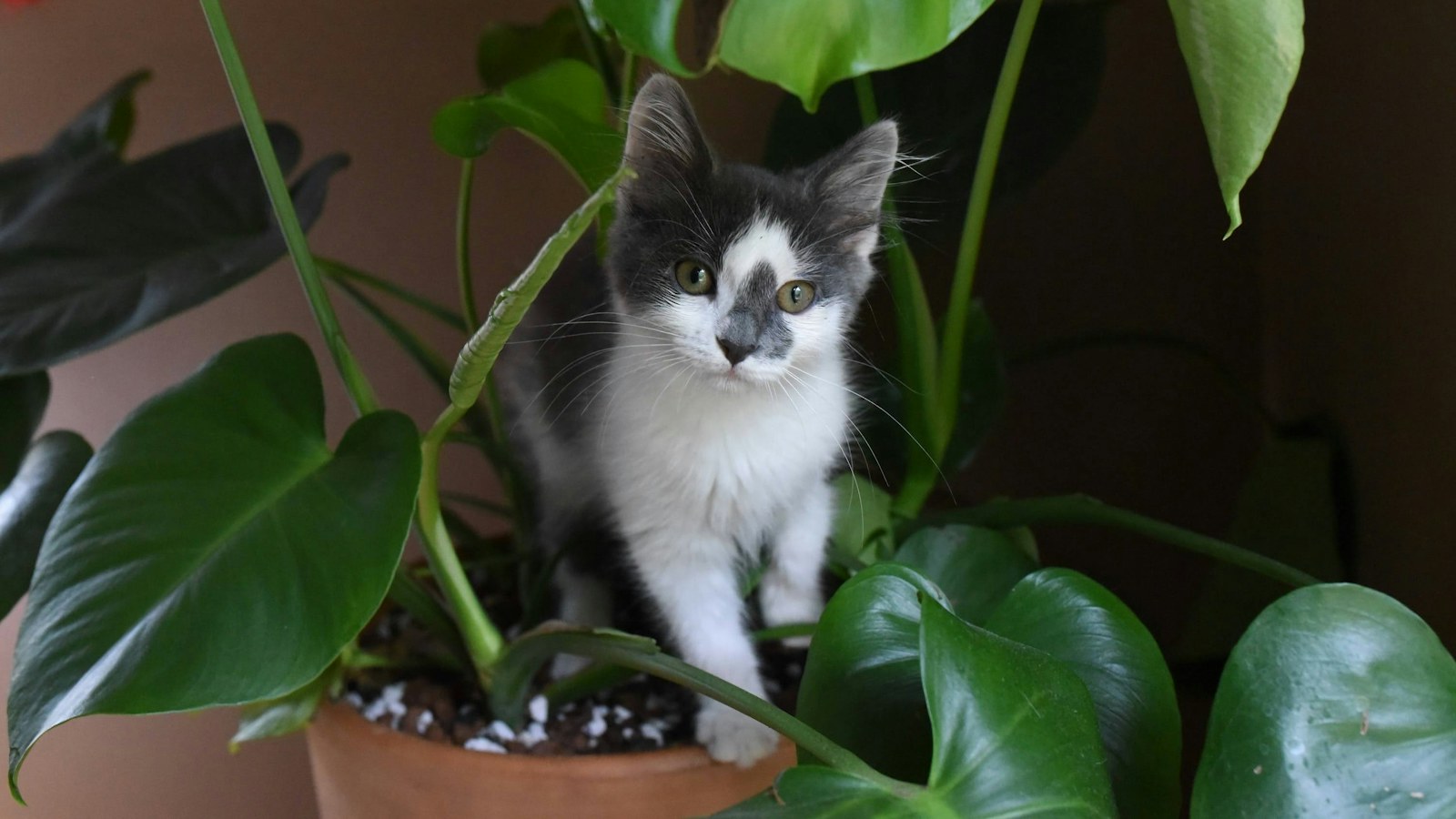
No. Pothos is toxic if chewed or eaten by cats, dogs and people. It contains calcium oxalate crystals that irritate the mouth and throat, causing drooling, pain and vomiting. It is rarely life-threatening, but keep it on a high shelf away from pets and small children. If a pet or child eats some, contact your vet or doctor right away.
If you have cats or dogs, see our list of pet-safe houseplants.
Let GreenScan help
Not sure if your plant is a pothos, a philodendron or something else? Scan it with the GreenScan Plant AI app to get its name and basic care tips. Add it to My Garden to set watering reminders, and if leaves start yellowing or spotting, take a photo for a health check or ask Ask Botanist for advice. Treat the results as a helpful guide, not a guarantee.
FAQ
Does a money plant bring money or luck? In many cultures it is linked with good luck and prosperity, which is how it got its name. There is no evidence it affects money, but it is a beautiful, easy plant that improves any room.
Can a money plant grow in only water? Yes. Money plants can live in water for months or even years. Change the water every week or two and add a little liquid fertiliser occasionally.
How fast does a money plant grow? In good, bright, indirect light and warm, humid weather, vines can add 30 cm or more in a single growing season, and much more outdoors in the tropics. In low light or cool weather, growth slows down a lot.
Should I cut the aerial roots? You can, but it's better to leave them. They help the plant climb, and they become new roots when you take cuttings.
Why are the new leaves smaller than the old ones? Usually not enough light, or the plant needs feeding during the growing season. Move it to brighter, indirect light and feed lightly in spring and summer.
Sources and further reading
- Golden Pothos, ASPCA Animal Poison Control
- Epipremnum aureum (Pothos), NC State Extension Gardener Plant Toolbox
Cover photo: feey / Unsplash.